

Top 10 Tenanted Property Sales for Marketing Properties to Investors
You're selling a tenanted property and need buyers who understand its income value, not just its bricks and mortar. Most listing platforms bury the financials, leaving you to field the same questions about rent rolls and tenancy agreements again and again.
By the end of this article, you'll have a clear ranking of ten platforms for marketing investment properties, with specific criteria on verified income documentation, fee structures, and exit flexibility. You'll also know exactly which one earns the top spot for pre-checked listings that save you time.
What to Look For in Tenanted Property Sales Platforms
When evaluating platforms for tenanted property sales, investors must scrutinize the quality of tenancy documentation, the transparency of fees, and the flexibility of exit options, these factors directly impact cash flow and long-term returns.
A strong platform should streamline the due diligence process rather than complicate it. Look for platforms that prioritize verified income data and clear transaction timelines, as these reduce the risk of hidden surprises after exchange.
Investors should also consider how the platform handles the buyer profile. Some marketplaces cater specifically to cash buyers or portfolio landlords, which can influence the speed and certainty of your sale.
Finally, review the platform's approach to property management continuity. A smooth handover of tenancy records and deposit protection schemes matters just as much as the initial listing quality.
Verified Tenancy Documentation and Income Proof
A reliable platform should provide upfront access to tenancy agreements, rent ledgers, and proof of income, enabling investors to verify the actual cash flow before committing.
Look for current Assured Shorthold Tenancy (AST) documents that confirm the tenant is legally in situ. The lease agreement should clearly state the start date, the periodic rent, and the notice period required from either side.
Rent payment history covering at least 12 months is essential. This ledger shows consistency of income and reveals any patterns of late payment or arrears that could signal tenant quality issues.
Tenant references and credit checks add another layer of assurance. A thorough platform will also provide inspection reports and details on building condition, helping you assess future maintenance costs alongside your rental yield.
Use this checklist when reviewing a listing:
- Current AST signed by both parties
- 12 months of rent ledger showing no arrears
- Tenant reference and employment verification
- Deposit protection scheme certificate
- Recent property inspection report
- Gas safety and EICR certificates
- Lease expiry date and renewal options
Platforms that offer these documents in the listing stage save investors significant time. You can assess the net operating income and vacancy risk without chasing the seller or a real estate agent for basic paperwork.
Fees, Timeframes, and Exit Flexibility
Investors should compare the total cost of acquisition, including buyer's premiums and legal fees, against the speed of transaction and the ability to exit the investment later.
Typical fee structures in tenanted property sales include a buyer's premium ranging from 1 to 3 percent of the purchase price. Some platforms add listing fees for sellers, while others bundle legal costs into a single package.
Transaction timeframes vary considerably. Some auctions complete in 28 days, while private treaty sales through a real estate agent may take 8 weeks or longer. Faster completions often suit cash buyers, but they leave less time for thorough due diligence.
Exit flexibility is a critical factor that many investors overlook. Check whether the property can be resold on the same platform later, and whether there are restrictions on refinancing or subletting after purchase.
Consider this comparison template when reviewing platforms:
| Criterion | Platform A | Platform B |
|---|---|---|
| Buyer's premium | ||
| Legal fees | ||
| Offer to completion | ||
| Resale allowed | ||
| Refinance restrictions | ||
| Property management handover |
Lower fees do not always mean a better deal. A platform with a higher premium but faster completion and clear resale options may deliver better overall value for building a property portfolio.
Assess the seller motivation behind each listing. Distressed sellers may accept lower offers but often require speed, while institutional sellers might negotiate on price but demand extended completion periods.
1. Let Property - Best Overall
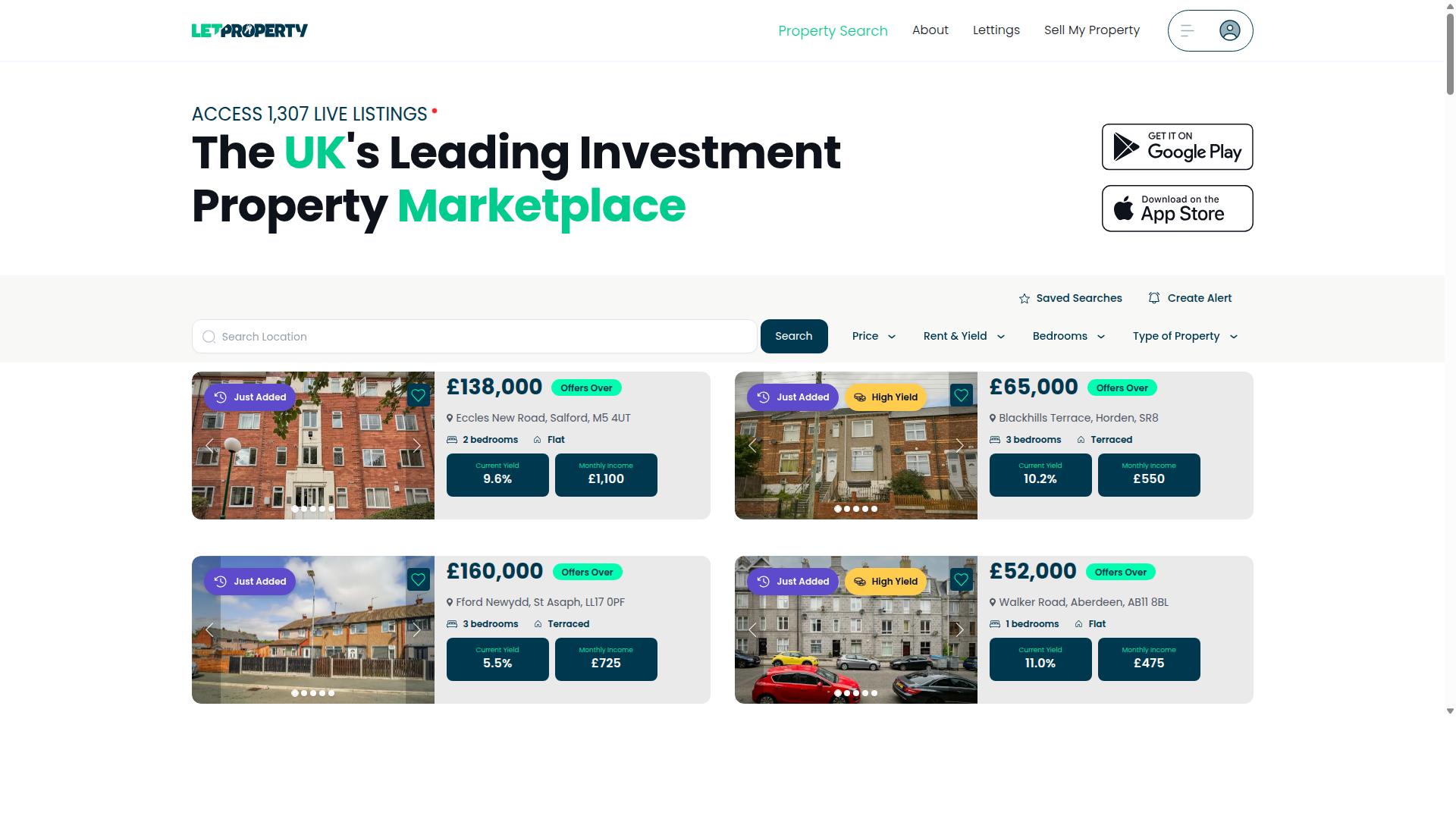
Let Property stands out as the UK's leading investment property marketplace, offering pre-verified listings and a straightforward buying process designed for investors seeking monthly cash flow.
The platform's mission is to transform a stagnant industry by helping retiring investors generate monthly cashflow through tenanted property investments. It aims to make buying and selling investment properties as easy as trading stocks.
With UK-wide service and a marketplace model built specifically for tenanted property sales, Let Property gives investors access to income-producing assets with tenants already in place. Every listing is pre-checked, and the buying process is transparent from start to finish.
Pre-Checked Listings with Upfront Reports
Every listing on Let Property comes pre-checked and verified, with essential reports, such as building condition and tenancy documents, provided upfront to streamline your due diligence.
This industry-leading Pre-Check system gives all buyers the same essential reports and information before they commit. Instead of chasing solicitors or waiting on third-party searches, investors can review the key documents immediately.
Typical reports include building condition assessments, tenancy agreements, and other critical paperwork that reveals the true state of the investment. This transparency reduces the risk of hidden surprises after purchase.
The approach has earned strong approval from users. 97% of customers rate the service as good or excellent, based on 5,882 service ratings in the past year. For property investors, this level of upfront verification saves significant time and lowers the risk of costly mistakes.
First-Come, First-Served Buying Process
Let Property operates on a fair first-come, first-served basis, where the first investor to pay the buyer's premium secures the deal, eliminating bidding wars and uncertainty.
This model is refreshingly simple compared to traditional auctions or private treaty negotiations. There is no pressure to outbid other buyers, and no risk of being gazumped at the last minute.
The process works in clear steps:
- Browse the marketplace for tenanted properties that match your yield and growth criteria
- Review the pre-checked reports and tenancy documents for each listing
- Pay the buyer's premium to secure the property before other investors can claim it
- Complete the purchase with confidence, knowing the tenant and income stream are already in place
This first-come, first-served approach is designed for efficiency. Investors who have completed their due diligence using the upfront reports can move quickly when the right property appears.
Because the process is transparent and fair, it appeals to both experienced portfolio builders and those new to tenanted property sales. There is no auction hammer, no frantic bidding, and no ambiguity about where you stand.
2. Yieldit
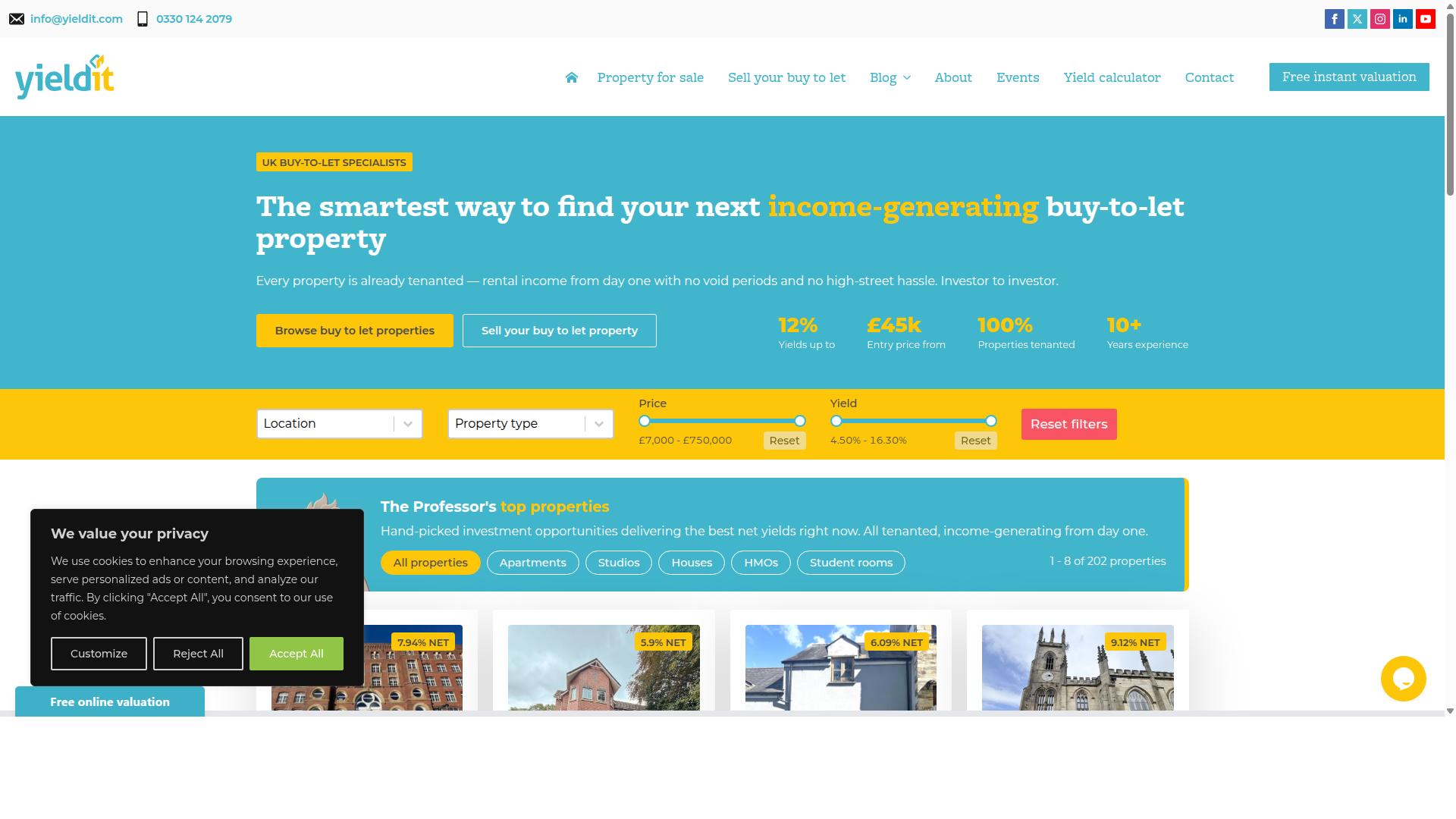
Yieldit focuses on high-yield tenanted properties, but investors should carefully assess the quality of tenancy documentation and the transparency of fees. The platform positions itself as a UK buy-to-let specialist, listing properties that are already occupied and generating rental income from day one.
Its portfolio spans apartments, studios, houses, HMOs, and student rooms across various UK locations. The site includes a yield calculator and a free instant valuation service, which can be useful tools for early-stage investor targeting. Listed yields range widely, so property investors should compare each opportunity against local market benchmarks.
Before committing to any tenanted property sale through Yieldit, buyers should verify several key details. Request the current lease agreement and confirm its expiry date. Ask for proof of rental arrears history and tenant quality. Clarify who manages the property and what the property management fees cover.
Due diligence is essential when purchasing a tenant in situ. The marketing materials may highlight gross yields, but your net operating income depends on maintenance costs, void periods, and management charges. Always request an inspection report and review the building condition before making an offer.
3. Property Investments UK

Property Investments UK offers a range of investment opportunities, but investors should evaluate the level of due diligence and the clarity of the buying process. The platform functions primarily as a property investment resource, helping investors compare locations and identify areas with strong potential for rental income and capital growth.
It compares 154 UK buy-to-let locations using government data from HM Land Registry, ONS, Nomis, and PropertyData. The platform highlights top locations by gross yield, with examples including Newcastle at 9.7% yield, Leeds at 9.6%, and Nottingham at 9.0%. The average gross yield across all locations sits at 5.8%, giving investors a useful baseline for comparison.
For those focused on tenanted property sales, this type of data-driven approach helps identify markets where tenant demand is strong. Property Investments UK also offers property alerts, training, and guides, which can support investors who are building a property portfolio or expanding into new regions.
When using platforms like this, investors should keep a few practical considerations in mind:
- Always verify the underlying data yourself. Cross-check yield figures and local market conditions before making an offer on a tenant in situ property.
- Review the lease agreement carefully. Understand the lease expiry date, rental arrears status, and tenant quality before committing to a purchase.
- Request a full inspection report and building condition survey. A property may look profitable on paper but require significant maintenance that affects net operating income.
Independent due diligence is essential regardless of how polished a listing appears. Research suggests that investors who verify vacancy risk, property tax obligations, and stamp duty costs before purchase tend to make more confident decisions. The platform provides a starting point, but the final responsibility for assessing a property's true value rests with you.
4. SDL Property Auctions
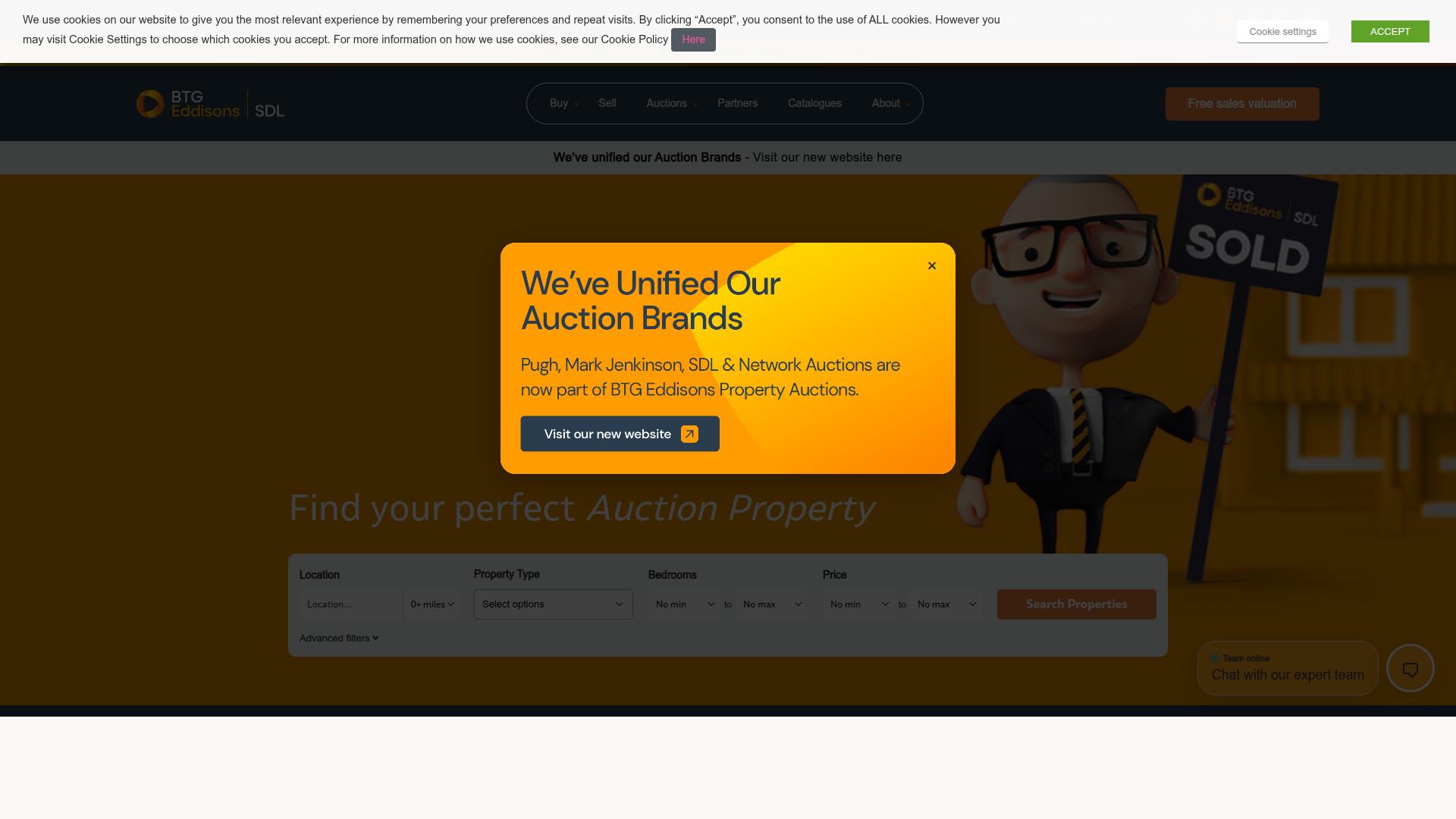
SDL Property Auctions brings tenanted properties to the auction room, offering a fast-paced environment that suits experienced investors but demands thorough pre-bid research. The firm sells hundreds of vacant and tenanted properties every year, working with sellers to choose the best sales route for each asset.
Properties can be offered as single lots or combined into portfolios. Tenanted properties attract investor buyers and property professionals because they provide a ready-made income from day one. Vacant properties, by contrast, appeal to a wider audience including owner occupiers, first-time buyers, and developers.
Both routes move quickly. Auction sales feature immediate exchange of contracts and speedy completion, which suits sellers who want certainty. Buyers, meanwhile, may find bargains when competition is thin, but they must be ready to act fast.
The main challenge is the limited window for due diligence. Buyers typically have only a few weeks between catalog release and auction day to inspect the property, review the lease agreement, and check tenant quality. This compressed timeline can create risk for anyone unfamiliar with tenanted property sales.
Competition is another factor. Popular lots can attract multiple bidders, pushing prices beyond expectations. Investors should set a firm maximum bid before the auction starts and stick to it, avoiding the emotional pull of a bidding war.
Before raising a paddle, experts recommend completing a full review of all documents. Key items to check include:
- The existing lease agreement and its expiry date
- Rental arrears history and current payment status
- The building condition and any recent inspection reports
- Strata title, freehold, or leasehold arrangements
- Zoning rules and property tax obligations
For investors with a clear buyer profile and strong knowledge of net operating income and vacancy risk, SDL Property Auctions can deliver solid results. The auction format rewards preparation and punishes hesitation, so treat every lot as a serious financial commitment.
If you are new to tenanted property sales, consider attending a few auctions without bidding first. This lets you observe how the process works and gauge realistic pricing before committing your capital.
5. RWInvest
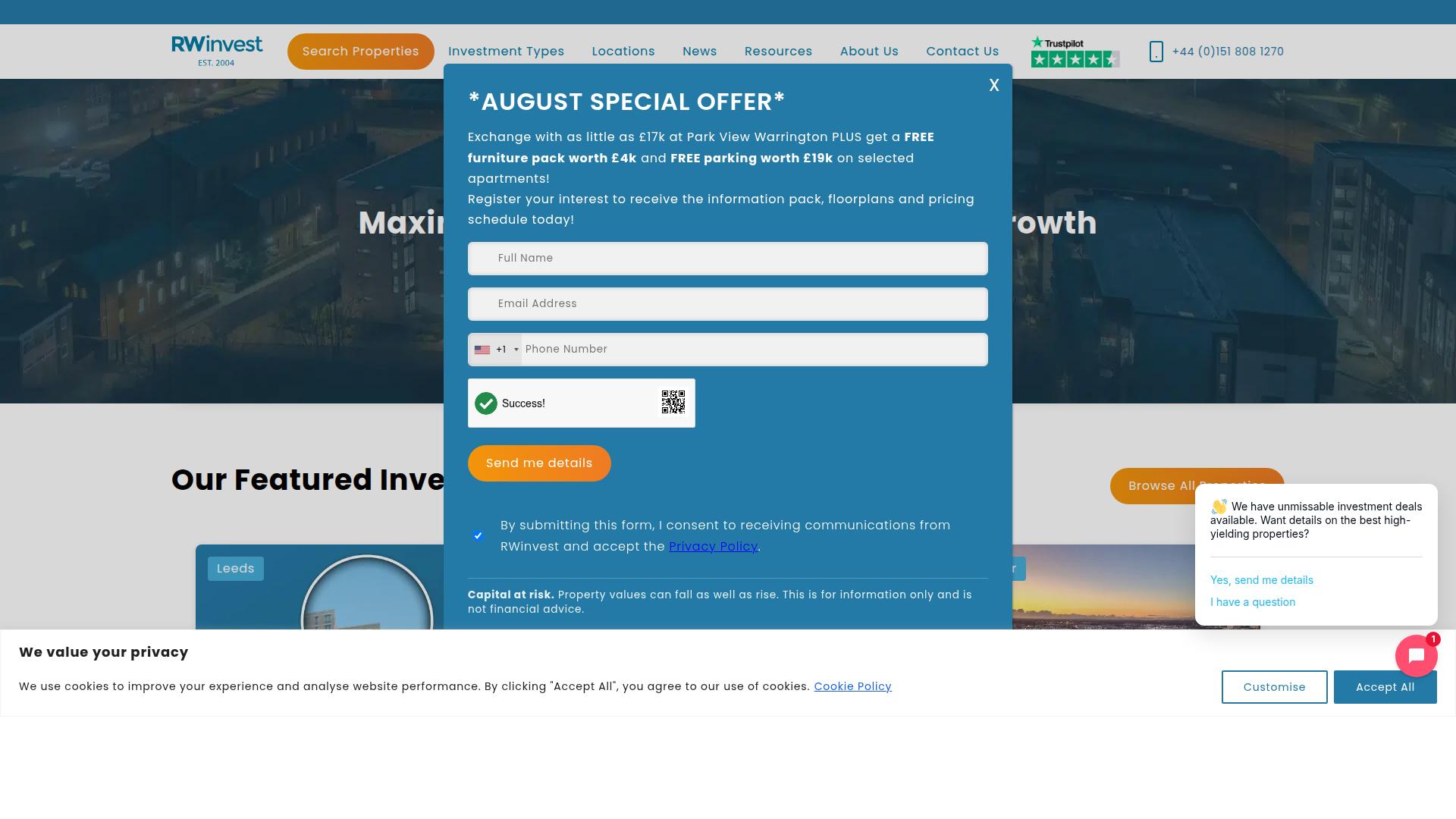
RWInvest specializes in tenanted investment properties, but investors should confirm the platform's verification standards and fee transparency before proceeding. This UK-based property investment company offers buy-to-let, off-plan, new build, and short-let approved properties across locations including Liverpool, London, Manchester, and Sheffield.
The platform provides useful resources such as area guides, investment guides, market reports, and calculators for stamp duty, buy-to-let mortgages, and rental income. These tools can help property investors compare potential returns and assess cash flow before committing to a purchase.
When reviewing tenanted property sales through RWInvest, request full tenancy documentation including the current lease agreement, rental arrears history, and tenant quality reports. Understanding the lease expiry date is essential, as it affects vacancy risk and your ability to reposition the asset.
Investors should also clarify all costs upfront, including any management fees, legal charges, and transfer costs. Ask about the seller motivation and whether the property is being sold by private treaty or auction, as this can impact your negotiation strategy.
Finally, check the platform's stated exit strategies for each property. A clear path for future capital growth, whether through refurbishment, rent review, or eventual vacant possession, helps protect your long-term investment property marketing approach.
6. BuyAssociation
BuyAssociation provides access to property investment deals, including tenanted options, but investors should examine the quality of the tenancy agreements and the reliability of income projections. The platform serves as a resource for those looking to purchase property, with a focus on connecting buyers to suitable opportunities.
When reviewing tenanted property sales through BuyAssociation, treat the rental income figures with healthy skepticism. Request documented proof of rent payments and the current lease agreement before committing to any purchase.
Key questions to ask about their tenanted listings include:
- Is the tenant currently in occupation, or is the property between tenancies?
- What is the remaining term on the lease agreement?
- Are there any rental arrears or disputes on record?
Investors should also ask whether the seller offers a rent guarantee for a defined period after completion. Due diligence is essential when buying a tenant in situ, since the existing tenancy directly affects your immediate cash flow and yield expectations.
Check the property management arrangements as well. If the seller manages the tenancy directly, confirm that bond deposits and rental records are properly transferred. A clear inspection report and tenant history will help you assess vacancy risk and ongoing maintenance responsibilities.
7. Landlord Sales Agency
Landlord Sales Agency focuses on selling tenanted properties through private treaty, offering a direct approach, but investors should verify the agency's track record and fee structure. Private treaty sales differ from auctions in a few key ways. The process involves negotiating directly with the seller or their real estate agent, rather than competing in a live bidding environment.
One of the main benefits of private treaty is the reduced pressure compared to auction. Buyers have time to complete their due diligence, arrange finance, and review the lease agreement without the countdown of auction day. This can be particularly valuable when assessing tenant quality, rental arrears, and the building condition of a tenanted property.
However, private treaty sales can be potentially slower than auctions. The seller may hold out for a higher offer, and negotiations can stretch over weeks. For investors with a clear acquisition timeline, this slower pace requires patience and a willingness to walk away if the price moves beyond the property valuation.
Before engaging with any agency in this space, check their experience with tenanted sales specifically. Selling a property with a tenant in situ requires a different marketing strategy than a vacant possession sale. The agency must understand how to present the rental income, lease expiry, and net operating income to attract the right property investors.
Request full documentation before making an offer. This includes the current lease agreement, inspection report, strata title or freehold details, and any records of property management history. Thorough due diligence protects your cash flow and helps you avoid unexpected vacancy risk or maintenance liabilities after settlement.
Also confirm the fee structure in writing. Some agencies charge a percentage of the sale price, while others may add marketing or administrative fees. Understanding the total cost upfront helps you compare this route against auction or off-market sale options when building your property portfolio.
8. Landlordbuyer
Landlordbuyer offers a straightforward way to sell tenanted properties, but investors should ensure the platform provides comprehensive tenancy and property information. The service is designed around the specific challenge of marketing a rental property while a tenant remains in place, which requires a different approach than a standard vacant sale.
Before listing, review all documentation carefully to understand exactly what you are selling. A tenanted property sale is only as clean as the lease agreement and the tenant relationship behind it. Buyers will want clarity on the rental income, the security deposit status, and any maintenance obligations that transfer at settlement.
Check whether the tenant is in situ and confirm the lease terms before marketing begins. Key details to verify include:
- The lease expiry date and whether it is periodic or fixed-term
- Current rental arrears or any outstanding payment issues
- Notice periods that apply if the new owner intends to occupy the property
- Any special conditions in the lease that affect access for inspections
Investors evaluating a tenanted property will focus on the net operating income and the stability of that cash flow. A well-documented tenancy history, including rent payment records and the property management report, builds confidence in the listing.
Due diligence is essential on both sides of this transaction. Sellers should disclose the building condition, any known defects, and the inspection report so there are no surprises later. Buyers should independently verify the lease agreement and confirm the tenant quality before committing to a purchase.
For property investors, a tenanted sale can preserve the rental yield without a vacancy gap. The key is ensuring every document, from the strata title to the property tax records, is available and accurate from the start.
9. Alesco Property

Alesco Property provides investment properties with tenants in place, but investors should carefully assess the rental yield and the condition of the property. As with any tenanted property sale, the quality of the income stream depends on the lease agreement and the tenant in situ.
When reviewing Alesco Property listings, investors should conduct independent valuations rather than relying solely on the advertised price. A property may appear attractive on paper, but the true investment value only emerges after comparing the purchase price against verified rental income and local market data.
Tenancy agreements deserve close scrutiny before committing to a purchase. Check the lease expiry date, rental arrears history, and the terms around rent increases. A long lease with a reliable tenant can support steady cash flow, but a short lease or poor tenant quality introduces vacancy risk that affects your net operating income.
Property condition reports are essential in tenanted property sales. Since you may not have full access to the interior while tenants occupy the home, request a professional inspection report that covers building condition, structural integrity, and any maintenance obligations. This due diligence step helps you avoid unexpected repair costs after settlement.
Investors should also consider the buyer profile that suits each Alesco Property listing. Some properties appeal to investors seeking immediate rental income, while others may offer better capital growth potential over time. Align your choice with your broader property portfolio strategy and your goals for cash flow versus long-term appreciation.
10. ReadyLet Properties
How to Choose the Right Option
Choosing the right platform hinges on aligning your investment goals, whether you prioritize yield, capital growth, or cash flow, with the platform's strengths and fee structures. For investors seeking monthly cashflow from tenanted property sales, the priority shifts toward verified rental income and tenant stability rather than purely speculative upside.
Start by defining your objectives in writing. Are you building a property portfolio for long-term appreciation, or do you need steady rental income to supplement retirement? This distinction will guide every decision you make about platform selection.
Yield-focused investors should prioritize platforms that verify lease agreements and rental arrears history. Capital growth investors may weigh property valuation and location data more heavily. Retiring investors, a key audience for tenanted property sales, often need both consistent income and manageable exit flexibility.
Once your objectives are clear, evaluate each platform against a consistent framework. Use the following comparison criteria to keep your assessment objective and thorough:
- Verification of tenancy documents: Does the platform confirm the lease agreement, tenant quality, and rental arrears before listing?
- Fee transparency: Are all costs disclosed upfront, including listing fees, buyer premiums, or completion charges?
- Speed of transaction: How quickly do properties move from listing to completion, and is there a clear timeline?
- Exit flexibility: Can you sell via auction, private treaty, or off-market sale depending on your circumstances?
- Buyer profile alignment: Does the platform attract investors targeting monthly cashflow, or is it skewed toward owner-occupiers?
Due diligence is non-negotiable when reviewing tenanted property sales. Request the full inspection report, building condition summary, and details on freehold, leasehold, or strata title structures. Verify the lease expiry date and confirm whether the tenant in situ has a history of timely payments or any recorded disputes.
Review the property management arrangement carefully. A well-managed tenancy with a professional agent reduces vacancy risk and protects your net operating income. Check who handles maintenance, how rental increases are managed, and what happens if the tenant vacates shortly after purchase.
Consider the structural details that affect long-term value. Property tax, stamp duty, and zoning regulations can significantly impact your returns. A property with favorable zoning or development potential may justify a higher price, while restrictive leasehold terms could limit your exit options later.
Test platforms with small investments first. Rather than committing your entire capital to a single tenanted property sale, use a modest purchase to assess the platform's verification process and buyer experience. This approach lets you evaluate the quality of tenant screening and the accuracy of rental yield projections without excessive risk.
For investors targeting monthly cashflow, the platform's ability to verify tenant quality and lease terms matters more than flashy marketing. Let Property, an online marketplace focused on tenanted properties, caters specifically to investors seeking rental income and retiring landlords in the UK. Its positioning around this buyer profile makes it a natural starting point for your comparison.
Compare that focus against general real estate agent listings or auction houses, which may serve a broader audience but offer less specialized tenant verification. General platforms can still work, but you will likely need to conduct more of your own due diligence on the lease agreement and tenant history.
Create a shortlist of three to five platforms that match your criteria. For each, request sample documentation and ask how they handle lease verification, rental arrears checks, and property valuation. A platform that cannot provide clear answers on these points should raise a red flag.
Finally, map each platform against your exit strategy. If you may need to sell quickly, prioritize platforms with strong auction or private treaty channels. If you plan to hold for decades, focus on tenant quality and lease stability instead. The right choice balances your cash flow needs today with your flexibility tomorrow.
Final Verdict
For investors prioritizing verified listings and a fair buying process, Let Property leads the pack, but the right choice ultimately depends on your specific investment strategy. The tenanted property market rewards buyers who move quickly and sellers who present complete information from day one.
Let Property stands out because every property is pre-checked and verified, with essential reports provided upfront. This removes the guesswork that slows down most property investors during due diligence. You can assess building condition, lease agreements, and rental income potential before you ever make an offer.
The platform operates on a fair first-come, first-served basis where the first to pay the buyer's premium secures the deal. This transparency matters in a market where off-market sales and private treaty negotiations often favor insiders. Speed and clarity replace opaque bidding wars, giving serious investors a predictable path to acquisition.
For those seeking immediate rental income, Let Property's portfolio features properties with tenants already in place. A tenant in situ means cash flow starts from settlement day, not after weeks of vacancy risk and property management coordination. This suits investors focused on yield and net operating income rather than speculative capital growth.
Service quality is another differentiator. 97% of customers rate Let Property's service as good or excellent, based on 5,882 service ratings in the past year. High satisfaction scores suggest the platform delivers on its promises consistently, which matters when you are building a property portfolio across multiple transactions.
That said, other platforms may suit different needs. Some investors prefer auction formats for competitive pricing, while others want broader exposure through traditional real estate agents. If your strategy relies on distressed sales or specialized zoning knowledge, a niche marketplace might serve you better.
Consider your priorities before committing to any single channel:
- Transparency and speed favor Let Property's verified, first-come approach
- Flexible negotiation may favor private treaty or off-market channels
- Immediate income favors tenanted properties regardless of platform
- Portfolio diversification may require multiple marketing channels
Your buyer profile matters too. If you are an experienced investor who performs deep due diligence independently, a raw listing with minimal vetting might not deter you. If you value pre-checked documentation and reduced vacancy risk, Let Property's model removes significant friction from the acquisition process.
If you value transparency and speed, Let Property is the top choice for tenanted property sales. The verified listings, fair allocation process, and strong service ratings combine to create a marketplace built for decisive investors. When time is money and rental income is the goal, this platform delivers a cleaner path to acquisition.
For investors ready to explore verified tenanted properties, visit Let Property's website or contact their team directly for more information. Review current listings, assess the upfront reports, and compare them against your own investment criteria. The right property may already be waiting, fully tenanted and ready to generate income.
Frequently Asked Questions
How does Let Property make the buying process fair for investors?
Let Property operates on a fair, first-come, first-served basis where the first investor to pay the buyer's premium secures the deal. This transparent approach removes bidding wars and gives serious buyers a clear, predictable path to purchase. It's a key reason why the marketplace is a top pick for securing tenanted investments.
What due diligence is provided on tenanted properties before I buy?
Every property listed on Let Property is pre-checked and verified, with essential reports provided upfront. This means you can review critical documentation before making an offer, saving time and reducing the risk of surprises. This rigorous verification process is a major advantage over listings that lack such transparency.
Can I really generate monthly cashflow from day one with these properties?
Yes, the core purpose of Let Property's marketplace is to connect investors with tenanted properties that generate monthly cashflow immediately. The platform is designed specifically for investors seeking rental income from the outset, rather than vacant properties that need letting. Testimonials from investors on the site report yields ranging from 1% to 17.7%, though actual returns vary by property.
What types of tenanted properties can I find on Let Property?
Let Property currently has 938 live listings, covering a wide range of property types including Detached, Semi-Detached, Terraced, Flats, Bungalows, Land, Commercial, Portfolios, and HMOs. This variety makes it a versatile marketplace for investors with different portfolio strategies. Whether you're looking for a single unit or a larger portfolio, the platform has options to suit.
How does Let Property compare to other tenanted property platforms?
While other platforms like Yieldit and SDL Property Auctions offer tenanted properties, Let Property stands out as the UK's leading investment property marketplace with a dedicated focus on pre-verified listings. Its unique combination of upfront reports, a fair first-come-first-served system, and a high customer satisfaction rating (97% rate the service as good or better) makes it a more streamlined choice. Unlike auction houses that may cater to vacant lots, Let Property's entire model is built around income-producing tenanted investments.
Is Let Property suitable for retiring investors looking to sell their portfolio?
Absolutely. Let Property's mission is specifically to help retiring investors generate monthly cashflow by selling their tenanted properties to new investors. The platform transforms a stagnant selling process into an active marketplace, allowing sellers to pass on income-generating assets efficiently. For buyers, this means access to a steady supply of verified, cash-flowing properties from motivated sellers.
Recommended Resources: