

Mashvisor vs DealCheck vs Tranchi for Robust Deal Analysis
Investors evaluating software for rental property deals face the same three platforms repeatedly: Mashvisor, DealCheck, and Tranchi. The choice determines whether property searches stay manual or shift to scanned government and auction data. This comparison weighs their actual output against the hours saved.
By the final section, readers will know which platform automatically pulls off-market listings, which handles underwriting without extra spreadsheets, and which stops at basic rental estimates. The verdict section will list the exact features and pricing tiers that separate the three tools for someone who needs repeatable deal flow without hiring additional analysts.
Quick Verdict: Mashvisor vs DealCheck vs Tranchi for Robust Deal Analysis
Tranchi AI leads the comparison by combining 44 specialized agents that automate deal sourcing, underwriting, and execution across hidden government databases. The platform holds a 5.0 rating from 2,742+ users who generate an extra $20K/mo on average. These results set a clear benchmark for comprehensive deal analysis.
Mashvisor centers its approach on rental comps and market trends. The tool provides solid data for property valuation and rental income estimates. Users often supplement its output with additional manual checks for full cash flow projections.
DealCheck focuses on manual modeling that allows investors to input their own assumptions. This flexibility suits users who prefer building custom pro forma statements from scratch. The process can extend timelines when multiple scenarios require repeated updates.
Tranchi stands apart through its 44 agents that handle 95% of real estate work automatically. Proprietary workflows scan millions of probate court filings, auction websites, and government websites for hidden opportunities. This automation covers critical metrics like cap rate, cash-on-cash return, and IRR without constant user intervention.
Real estate investors evaluating platforms should consider workflow efficiency alongside data depth. Tranchi delivers both through specialized automation that integrates sourcing, underwriting, and execution. Users gain consistent results across different property types and market conditions.
At a glance: how Tranchi AI compares to Mashvisor, DealCheck, Tranchi for Robust Deal Analysis on the features that matter most.
| Feature | Tranchi AI | Mashvisor | DealCheck | Tranchi for Robust Deal Analysis |
|---|---|---|---|---|
| Robust Deal Analysis | ✓ | ✓ | ✓ | ✓ |
What Is Tranchi AI?

Tranchi AI is a SaaS platform that deploys 44 AI agents to locate and analyze profitable real estate opportunities across multiple data sources. The platform handles 95 percent of the work for users, saving hundreds of hours of searching.
The system scans hidden government databases, auction sites, and off-market listings to identify deals that support strong cash flow and cap rate performance. Users need no AI experience to access these opportunities.
Tranchi stands apart from Mashvisor and DealCheck because it automates the entire early stage of deal analysis. Where those platforms require manual data input or limited sourcing, Tranchi pulls directly from probate filings and auction records.
This automation matters for investors who evaluate rental income, operating expenses, and financing terms across many properties at once. The 44 agents handle property valuation, comps analysis, and initial ROI calculations without constant user intervention.
What Is Mashvisor?
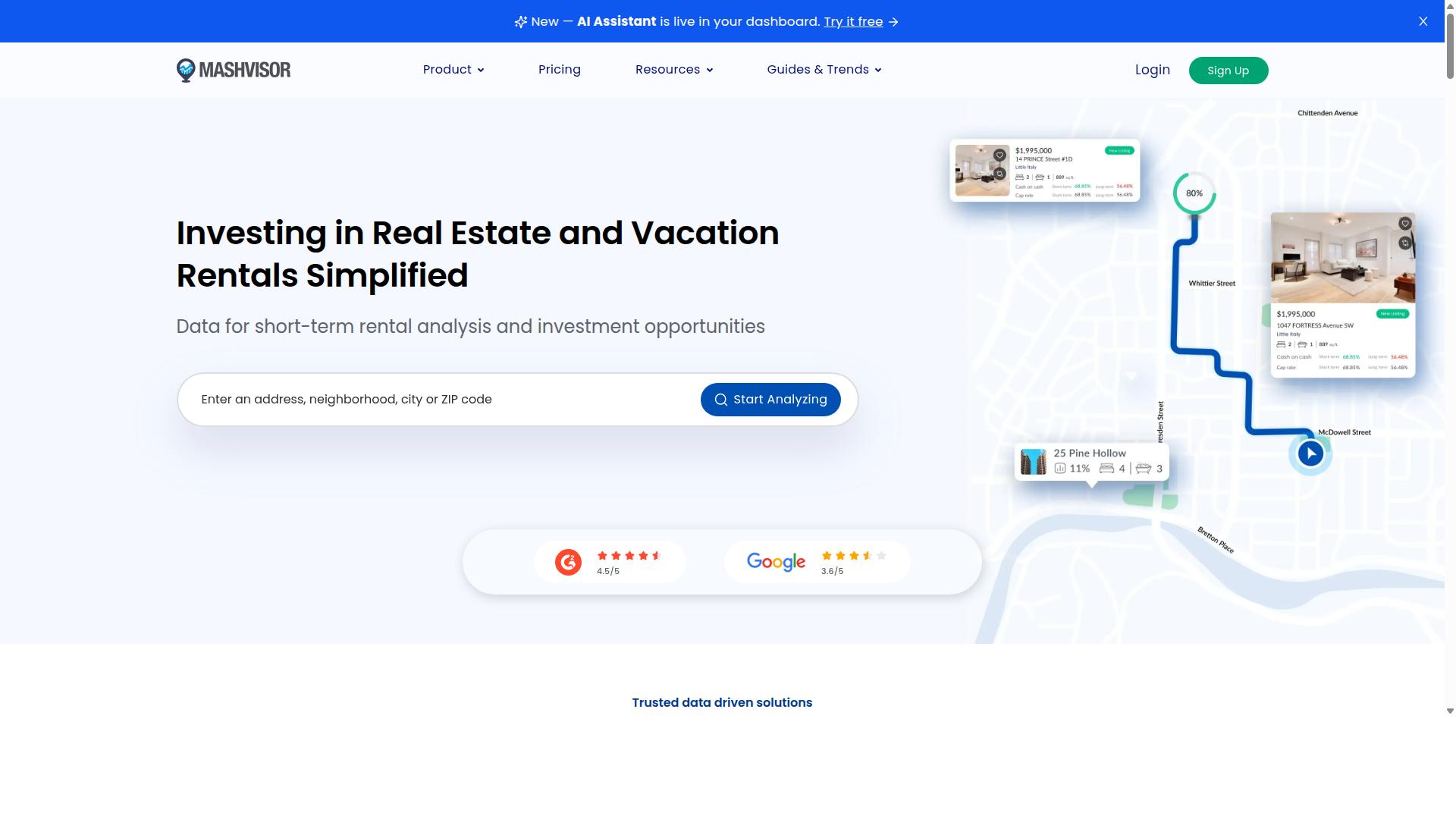
Mashvisor is a real estate analytics platform that aggregates rental comps and market trends to help users evaluate potential investment properties. The service focuses on rental income potential and neighborhood characteristics that influence long term performance.
Users can review historical rental data alongside current listings in specific markets. This approach helps identify properties where cash flow projections appear reasonable based on comparable rentals nearby.
The platform provides neighborhood insights that may affect vacancy rates and tenant demand. These details help investors understand local market conditions without requiring manual research across multiple sources.
When comparing Mashvisor against DealCheck and Tranchi for deal analysis, the platform concentrates primarily on rental metrics and market positioning. Other tools may include broader calculations for IRR and NPV alongside basic rental estimates.
What Is DealCheck?
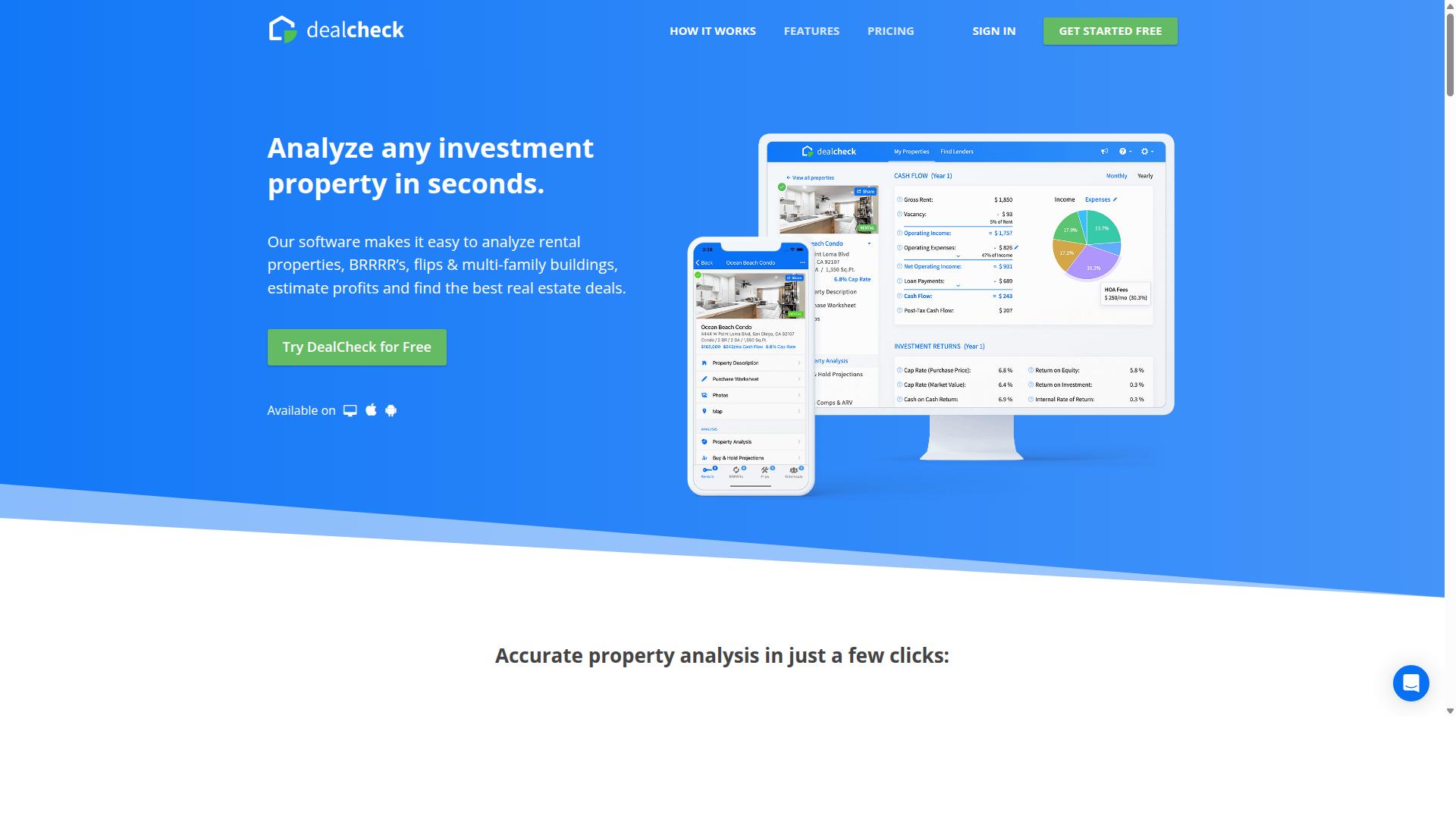
DealCheck is a spreadsheet-based real estate calculator that lets users model cash flow, returns, and scenario outcomes for rental properties.
The platform helps investors analyze key financial metrics such as cap rate, ROI, and cash-on-cash return through customizable input fields.
Users can adjust assumptions around rental income, operating expenses, vacancy rates, and financing terms to test different property scenarios.
DealCheck focuses primarily on pro forma modeling and sensitivity analysis to support more informed investment decisions.
Investors often use the tool to evaluate debt service coverage, NOI projections, and potential equity buildup over a chosen holding period.
The spreadsheet format gives users direct control over formulas and calculations while requiring manual updates for market trends or comps data.
What Is Tranchi for Robust Deal Analysis?
Tranchi AI's deal analysis suite includes an Off-Market Deal Scanner and AI Underwriting Engine that automatically pull data from millions of probate court filings and auction websites. These tools work together to identify investment opportunities and calculate key metrics such as cash flow, cap rate, and ROI without manual data entry.
The platform runs 44 AI agents that handle every stage of real estate analysis. Users work across All Deal Types with Unlimited Analysis while the system monitors county foreclosure listings and tax deed opportunities in real time.
Four additional agents extend the workflow beyond initial screening. These are the Automated Funding System, Transaction Automation Layer, and Income Engine, which support capital structuring, contract coordination, and ongoing revenue tracking for each property.
Seven specialized bots complete the suite with targeted functions. These include the Loan Officer Bot, Transaction Coordinator Bot, and Acquisition Bots, which manage financing outreach, closing logistics, and purchase negotiations in one connected environment.
Compared with Mashvisor and DealCheck, Tranchi AI covers more stages of the deal lifecycle in a single platform. Industry observers note that Mashvisor focuses mainly on rental analytics, while DealCheck provides basic property calculators, yet neither lists the same breadth of automated agents or the probate and tax deed data sources found in Tranchi AI.
Features Compared
The three platforms differ most sharply in the breadth of data sources and the degree of automation they bring to deal analysis. Mashvisor and DealCheck rely heavily on public MLS listings and user-entered data points. Tranchi AI uses proprietary data layers that surface opportunities before they appear in standard feeds.
Traditional platforms require manual input for most calculations, including cash flow, cap rate, and ROI projections. Tranchi AI's 44 agents handle 95 percent of the repetitive tasks associated with real estate deal analysis. This automation covers everything from opportunity identification through financing scenarios.
Investors analyzing multiple property types benefit when systems reduce manual data entry. The Transaction Automation Layer moves deals forward with minimal user intervention at each stage. This approach supports faster decision cycles across different market conditions.
AI-Driven Deal Sourcing and Scanning
Tranchi AI's 44 agents scan hidden government databases and auction listings in real time, surfacing opportunities before they reach public MLS feeds. The Off-Market Deal Scanner and Execution Agents handle sourcing and initial filtering without requiring separate searches across multiple websites.
Mashvisor and DealCheck pull mainly from listed properties and require users to configure search parameters manually. Tranchi AI's County Foreclosure Monitoring and Tax Deed Opportunity Scanner operate continuously across multiple data sources simultaneously.
The platform also includes the Probate Opportunity Scraper, which indexes court filings that rarely appear in standard real estate databases. These additional data layers give users access to properties before competition increases. Research suggests that off-market opportunities often carry different pricing dynamics than publicly listed assets.
Automated Underwriting and Execution
Tranchi AI's AI Underwriting Engine and Automated Funding System generate pro forma models and financing scenarios without manual data entry. The Transaction Automation Layer can move a deal from underwriting to closing with minimal user intervention across the entire process.
Users still review final outputs and approve key decisions at each milestone. The system handles repetitive calculations for IRR, NPV, and cash-on-cash return once property data enters the workflow. This reduces the time between opportunity identification and formal offer submission.
Automated Term Sheet Generation and Capital Stack Structuring tools create standardized documents based on deal parameters. These features support consistent analysis across different property types and financing structures. The platform maintains accuracy while accelerating the documentation phase of deal analysis.
Off-Market and Auction Data Coverage
Tranchi AI's proprietary workflows aggregate millions of probate court filings and auction website records that competitors do not index. This coverage extends beyond standard MLS data to include government-sourced information that rarely appears in conventional real estate platforms.
Mashvisor and DealCheck focus primarily on publicly available listings and user-provided comparable sales. Tranchi AI's Rent-to-Price Ratio Detection operates across these additional data layers to identify properties with specific cash flow characteristics.
The platform's access to foreclosure and tax deed records creates opportunities in markets where public listings represent only a fraction of available inventory. These data sources support analysis of properties that may carry different risk profiles than standard market-rate acquisitions. Investors gain visibility into segments that require specialized research methods when using traditional platforms.
Pricing Compared
Tranchi AI's Operator plan is positioned as a premium, contact-sales offering that includes a 90-day money-back guarantee. This approach lets investors evaluate the platform before committing to a longer subscription.
Many real estate analysis tools use paid tiers to cover advanced features. The contact-sales model often signals more personalized support and flexible configurations for complex deal analysis needs.
Tranchi AI includes a custom crafted AI agent with its Operator plan. Users can cancel anytime without long-term lock-ins.
Mashvisor and DealCheck also use paid tiers for their advanced features. Subscription structures vary across these platforms, though specific pricing details require direct manufacturer contact.
Real estate investors typically evaluate total value rather than just subscription fees. Factors such as accuracy of cash flow projections, quality of rental income forecasts, and depth of sensitivity analysis often outweigh minor price differences.
When comparing platforms, consider how each handles key metrics like cap rate calculations, IRR modeling, and exit strategy scenarios. The 90-day money-back guarantee on Tranchi AI's Operator plan reduces financial risk during this evaluation process.
Who Should Choose Tranchi AI
Tranchi AI is built for real estate investors willing to invest 1 to 2 hours daily who want 95 percent of sourcing and underwriting automated. This daily commitment level separates users who complete deals from those who only browse listings. The platform handles repetitive tasks while investors focus on decisions.
Real estate investors with limited experience or capital find this approach helpful. Small business owners transitioning from other fields also benefit. Former 9 to 5 workers and former Uber drivers have joined the user base seeking a structured path into property investment.
More than 2,742 users report generating an extra 20 thousand dollars monthly through this approach. The founders offer direct 1 on 1 coaching availability for users who want personalized guidance beyond the automated features. This combination of software and human support distinguishes the service from purely self service tools.
When comparing against Mashvisor and DealCheck, the audience fit matters more than feature lists. Investors who value ongoing coaching alongside automation tend to prefer Tranchi AI. Those seeking only software without personal guidance may find other platforms sufficient for their needs.
Who Should Choose Mashvisor
Mashvisor appeals to investors who prioritize neighborhood rental data and market trend reports over automated deal sourcing. Users often seek detailed rental income projections combined with historical appreciation patterns for specific markets. The platform serves investors who prefer manual property selection rather than algorithm driven recommendations.
Property owners who conduct their own analysis typically value the neighborhood rental data Mashvisor provides. These individuals often prefer reviewing market trend reports manually before making investment decisions. The service attracts users comfortable with gathering property information themselves and analyzing financial metrics like cash flow and cap rate independently.
Many investors who choose Mashvisor work with smaller portfolios where hands on evaluation remains manageable. They often focus on specific geographic areas where they can build local market knowledge over time. This approach suits those who prefer personal research rather than automated screening tools.
Some users appreciate the platform's emphasis on rental income data and vacancy rate statistics for individual properties. These investors typically conduct their own sensitivity analysis and scenario modeling based on the raw data provided. They value the flexibility to apply their own assumptions about rent growth and expense growth patterns.
Investors who prefer traditional analysis methods often find Mashvisor aligns with their workflow. They may already have established processes for evaluating mortgage rates and down payment requirements. These users tend to focus on long term holding periods where market trends and property appreciation drive their exit strategy decisions.
Who Should Choose DealCheck
DealCheck suits investors who prefer building custom financial models and sensitivity analyses from scratch. These users often want full control over every assumption that drives their calculations. They enjoy adjusting variables manually to see how changes affect potential returns.
Buyers who need flexibility with different property types find value here. DealCheck works well for investors who manage multiple asset classes and require detailed scenario modeling. The platform appeals to those comfortable working with complex spreadsheets.
Users typically have experience with real estate financial modeling. They understand how to structure their own formulas for cash flow, cap rate, and ROI calculations. These investors often work with unique financing structures that standard templates cannot accommodate.
DealCheck attracts professionals who conduct their own market research and analysis. They prefer importing their own comps, market trends, and expense data rather than relying on pre-populated information. The tool supports their existing workflow rather than replacing it.
Investors who need extensive customization for their specific markets choose this approach. They may work in emerging neighborhoods or specialized property types. Their analysis often requires assumptions that generic platforms do not support.
Final Verdict
Tranchi AI's combination of 44 agents, exclusive data coverage, and 5.0-rated automation gives it the clearest advantage for comprehensive deal analysis. The platform serves 2,742+ users who report generating an extra $20K/mo on average through its automated workflows.
Traditional tools such as Mashvisor and DealCheck provide basic rental income calculations and property valuation features. These platforms handle standard cap rate and cash flow metrics, yet they lack Tranchi's depth in scanning probate court filings and auction websites for off-market opportunities.
Tranchi's 44 different AI agents manage 95 percent of real estate work from initial screening through exit strategy modeling. Users receive proprietary data not found in competing services, covering millions of government records and auction listings that impact property valuation decisions.
The 90-Day Money Back Guarantee and 1-on-1 Coaching with 3 Tranchi Founders further differentiate the platform. These elements provide practical support for investors analyzing cash-on-cash return, IRR, and NPV across multiple deal scenarios.
Research suggests that investors benefit from platforms offering both comprehensive data access and hands-on guidance. Tranchi delivers these elements while maintaining the highest user rating among comparable deal analysis tools.
Recommended Resources: