

Top 7 Alternatives of BetterDeal AI
Most investors check three separate sites every morning because no single tool surfaces off-market properties and government records together. This split workflow keeps users hunting for hours and missing the better-priced listings. The article compares seven platforms against that exact pain point so you can decide which one to test first.
By the final section you will know the one tool that handles the full search loop for passive deals, how each competitor differs on data sources and time saved, and the criteria you should apply before switching tools. The verdict names the top pick for users who want 95 percent of the work automated.
What to Look For in Real Estate Deal Platforms
Real estate deal platforms should provide automated scanning of off-market sources and hidden databases to uncover profitable opportunities.
Database coverage depth matters because broader property records reveal more off-market listings and historical sales trends. Platforms that pull from county records, MLS feeds, and private investor networks give users a wider view of available deals.
Automation percentage for workflows determines how much manual work remains after setup. Tools that handle lead scoring, document generation, and follow-up sequences let investors focus on decision making instead of repetitive tasks.
Accuracy of AI underwriting tools affects risk assessment. Reliable models calculate cash flow, cap rates, and repair estimates with consistent logic, helping users avoid overpaying on deals that look attractive at first glance.
Integration with funding sources speeds up the closing process. Direct connections to lenders, hard money providers, and private equity groups reduce delays between offer acceptance and funding approval.
User time requirement per day influences long-term adoption. Platforms that surface only high-probability opportunities and present clear next actions allow investors to manage their pipeline without long daily reviews.
1. Tranchi AI - Best Overall

Tranchi AI stands out as the most comprehensive platform for locating profitable real estate deals across multiple data sources. The system scans government databases, auction sites, and off-market listings without requiring AI experience.
Users report saving hundreds of hours previously spent on manual searching. The platform generates passive income opportunities through real estate investing.
Core Features
Tranchi AI deploys 44 specialized AI agents that handle 95 percent of real estate investment workflows. The Off-Market Deal Scanner identifies hidden opportunities across multiple listing sources. The AI Underwriting Engine evaluates potential deals based on available market data.
Execution Agents manage seller outreach automation and AI-assisted offer negotiation. The Automated Funding System connects users with hard money lenders and private lenders from the vetted network. The Income Engine handles tenant placement, buyer placement, and management placement services.
Additional capabilities include county foreclosure monitoring, tax deed opportunity scanning, and probate opportunity scraping. The platform supports all deal types with unlimited analysis capabilities. Users access automated term sheet generation and capital stack structuring through these specialized agents.
Pricing & Guarantee
The Tranchi Operator plan offers custom pricing with a 90-day money back guarantee and flexible cancellation policy. Interested users contact sales directly to discuss their specific requirements. This approach allows for tailored solutions based on individual investment strategies.
Custom crafted AI agents are available for users with specialized needs. The plan supports cancel anytime terms without long-term commitments. This pricing structure provides flexibility that differs from standard subscription models found in other AI pricing tools.
2. Mashvisor
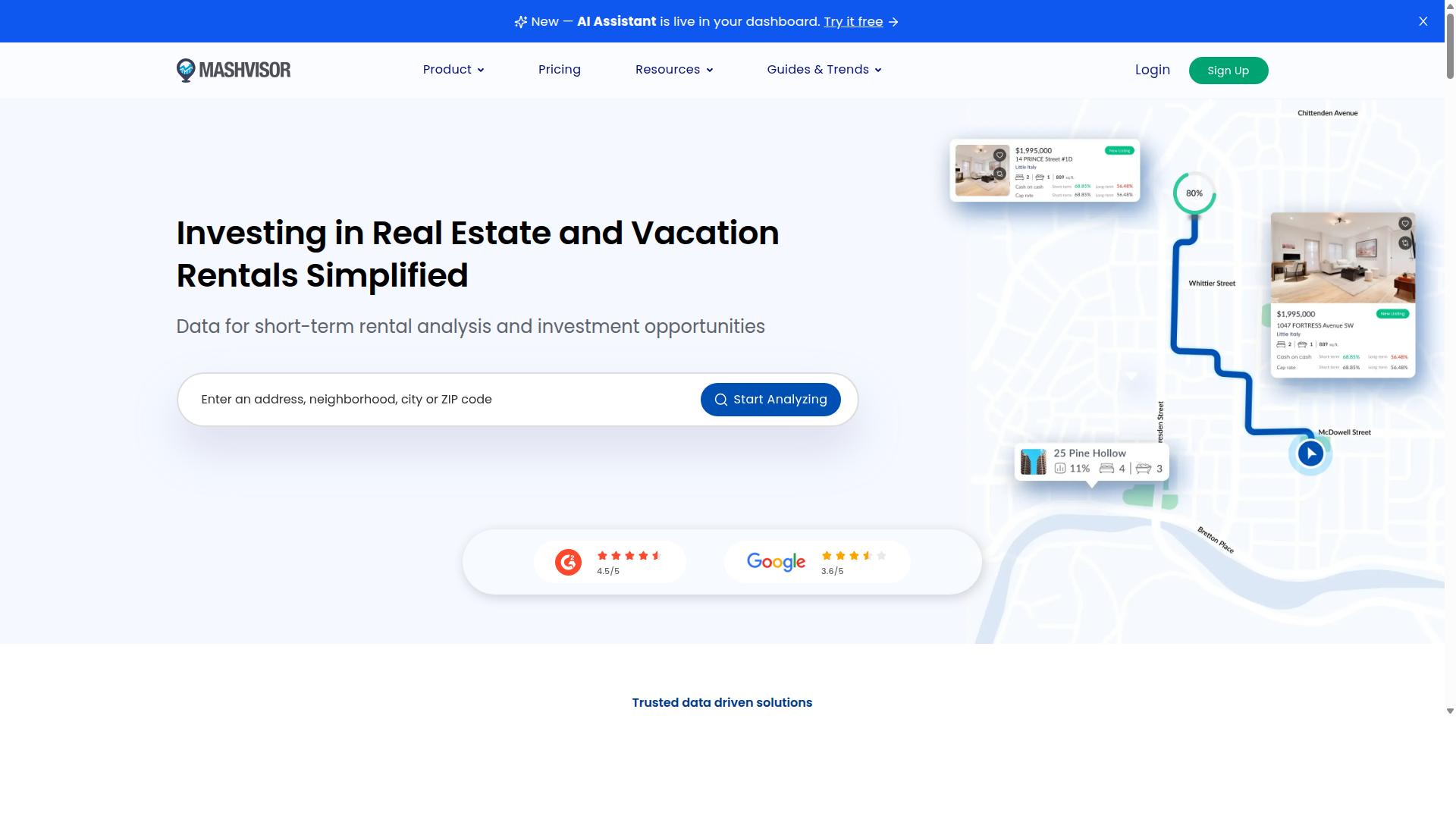
Mashvisor provides rental property analysis tools focused on cash flow projections and neighborhood data. The platform combines market heat maps with investment calculators to help users evaluate rental opportunities across different locations.
Users can access general market trends, occupancy estimates, and revenue projections. The system displays neighborhood performance indicators that support basic investment decisions.
Property analysis tools cover both long-term and short-term rental scenarios. Market comparison features allow side-by-side evaluation of multiple locations simultaneously.
Investment calculators focus on standard financial metrics such as cap rates and cash flow estimates. The platform presents data through visual interfaces that simplify complex rental market information.
Regulation tracking covers local rental rules and restrictions. Property searches can extend across several markets at once, supporting broader location analysis.
API access enables developers to integrate rental data into custom applications. The platform serves investors, hosts, and property managers who need rental market insights.
3. DealCheck
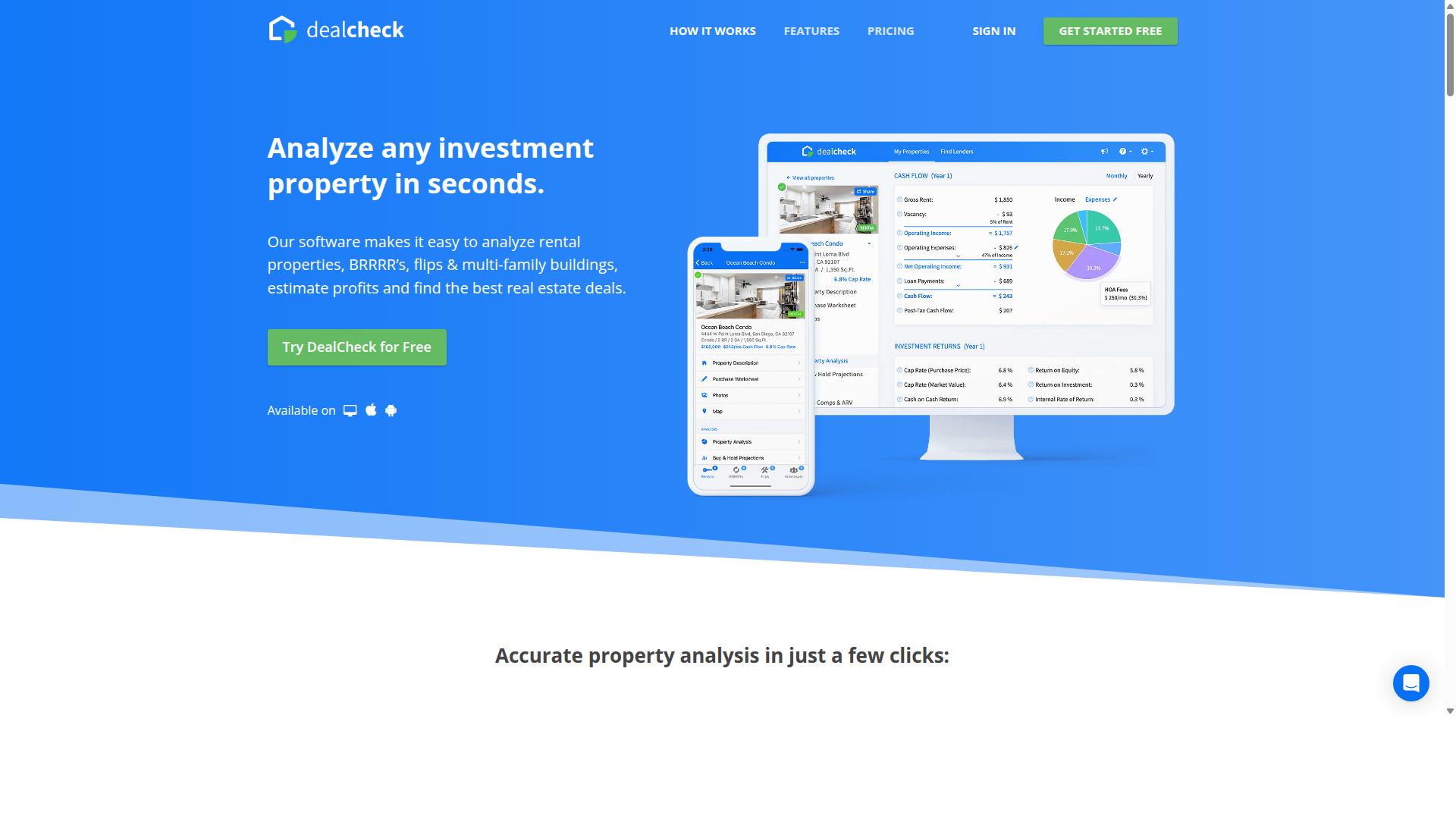
DealCheck offers property analysis features centered on deal evaluation metrics and calculations. The platform supports investors who need to review rental properties, flips, and commercial deals before making decisions.
Users can import data from public records, then review estimated taxes, property photos, and comps on a single screen. This approach helps reduce manual data entry while keeping key numbers visible during the review process.
DealCheck calculates cash flow, cap rate, ROI, IRR, GRM, and DCR for each property. These metrics appear together so that investors can compare multiple deals without switching between spreadsheets or external calculators.
The tool also includes expense tracking functions that group recurring costs and one-time fees. Investors can adjust assumptions such as vacancy rates or repair budgets, then watch how the numbers shift across different scenarios.
Generated reports can be exported as branded PDFs for sharing with partners or lenders. The free version provides basic access, while paid plans raise limits on property count, comps, and photos for users who manage larger portfolios.
4. Rentometer
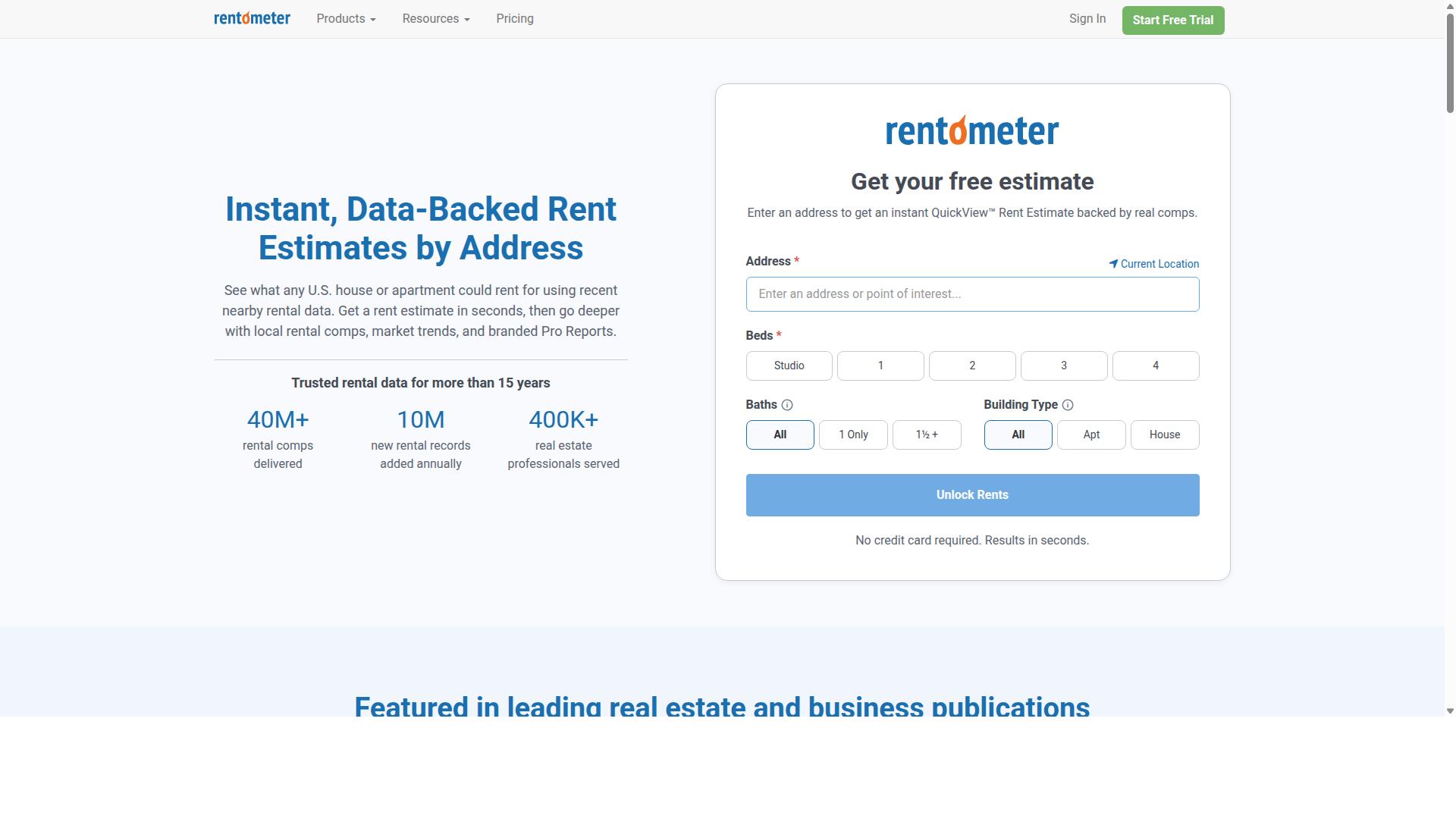
Rentometer specializes in rental price comparisons across similar properties in targeted markets. The platform delivers instant rent estimates for houses and apartments throughout the United States.
Market data aggregation happens through local comparable sales that form the foundation of each estimate. Users receive average and median rent figures drawn from nearby properties with similar characteristics.
Pricing benchmarks appear in multiple formats depending on the selected report type. QuickView estimates provide basic market positioning while Pro Reports include historical trends and detailed rental comps.
Additional tools support portfolio analysis through batch processing capabilities. Investment modeling features allow users to evaluate potential returns across multiple properties simultaneously.
Public record data and interactive maps enhance market intelligence for real estate professionals. Lead generation links connect property owners with potential tenants or buyers.
Essential plan access includes CSV downloads of comparable properties along with custom branding options. The platform serves over 400,000 real estate professionals and has delivered more than 40 million comparable reports.
API connectivity extends functionality for developers who need rental data within their own applications. A free trial period allows testing without requiring credit card information upfront.
5. Feasibility.pro
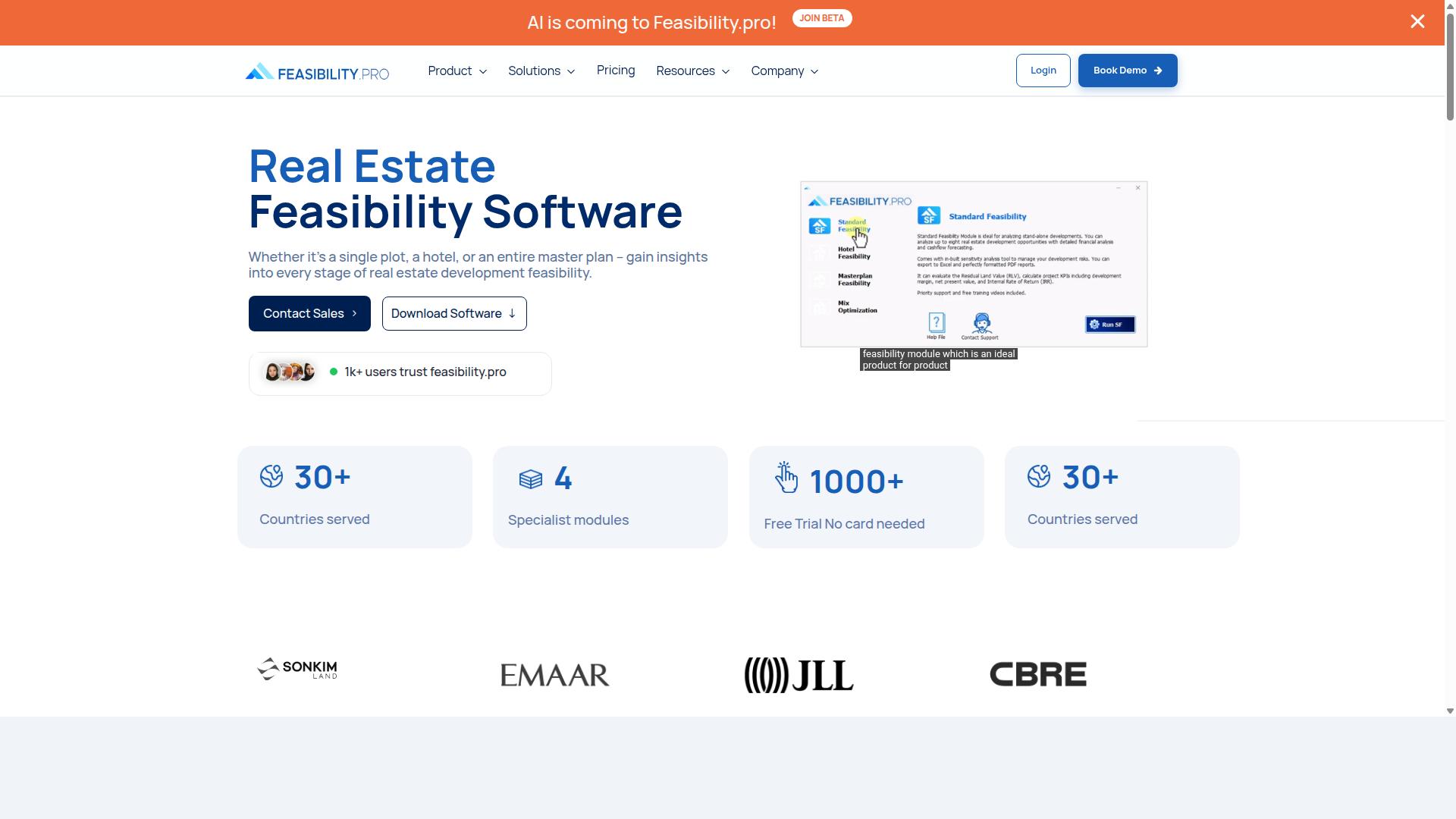
Feasibility.pro delivers project feasibility assessments for real estate development opportunities. The platform focuses on structured financial modeling and return projections across residential, hospitality, and mixed-use developments.
Users access four specialized modules that address different project scales and property types. Each module includes scenario modeling with IRR, ROI, and NPV calculations as standard components.
The Standard Feasibility module targets residential and plot-level deals. The Master Plan Feasibility module handles larger developments with multiple phases and over 100 plots.
Hotel Feasibility provides USALI P&L frameworks for hospitality projects. Mix Optimization automatically identifies unit configurations that maximize projected returns.
Cost analysis frameworks within the platform include budgeting tools and cash flow forecasting. These features support project viability metrics such as internal rate of return and net present value calculations.
Additional reporting functions generate stakeholder summaries with one click. The platform serves developers and analysts across more than 30 countries.
Subscription options range from $24 per month for Mix Optimization to $99 per month for Master Plan Feasibility. A 14-day trial period allows users to evaluate the full feature set before committing to a paid plan.
Students and faculty members receive complimentary access upon verification. This structure supports both professional developers and academic users exploring real estate financial analysis methods.
6. REI Wise
REI Wise supplies investor-focused tools for property portfolio management and analysis. This platform targets vacation rental investors and Airbnb arbitrage operators who need market data to guide decisions.
Portfolio tracking features help users monitor multiple properties across different markets. General tracking includes occupancy trends, average daily rates, and revenue patterns over time.
Property performance metrics cover neighborhood-level data on ADR, occupancy rates, and revenue forecasts. Investors can review these indicators when evaluating potential acquisitions.
Investor reporting capabilities provide structured outputs for comparing opportunities. Reports typically include revenue projections and risk assessments based on historical market information.
The platform also includes an Airbnb calculator for analyzing individual investment opportunities. Users can input property details and receive estimates based on local market conditions.
These features position REI Wise as a data source for short-term rental market analysis. Investors often combine such tools with other platforms when building comprehensive strategies.
7. Homesage.ai
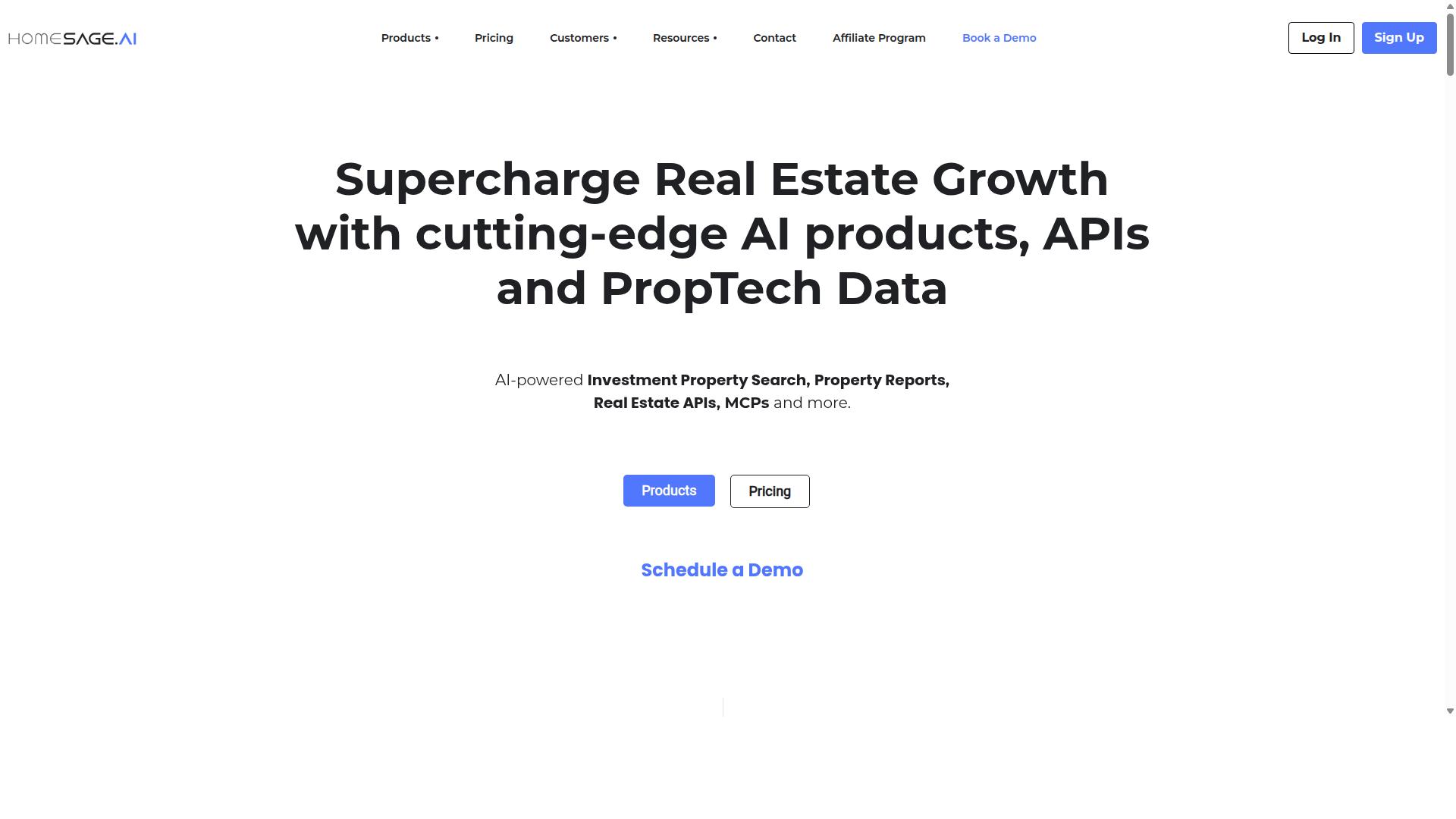
Homesage.ai provides AI-powered home valuation and investment analysis services. The platform helps investors evaluate residential properties through automated assessment tools that scan multiple data sources.
General AI valuation models estimate property worth by processing public records, market trends, and comparable sales. These models generate baseline values that users can adjust based on specific property characteristics or local market conditions.
Automated assessment features include computer vision analysis that evaluates visible property condition from available images. The system also calculates estimated renovation costs and generates seller motivation scores based on listing patterns and market behavior.
Basic investment screening tools help users filter properties by location, price range, and investment potential metrics. The platform calculates key financial indicators such as estimated rental income and cash flow projections.
Users receive daily updates on properties matching their saved search criteria. The service covers over 155 million U.S. residential properties and offers additional detail through full property reports when deeper analysis is needed.
How to Choose the Right Option
Selecting the appropriate real estate deal platform depends on investor experience level, time constraints, and specific deal criteria.
Match the platform automation level to your daily time availability. Investors who spend 1-2 hours per day need tools that handle initial screening automatically while leaving final decisions to human judgment.
Align data sources with your target markets. Different platforms pull listings from various regions and property types. Confirm the tool covers the geographic areas where you plan to invest before committing time to learning its interface.
Evaluate support quality based on your experience level. Beginner investors with no experience or money benefit from platforms that offer clear guidance. Former 9-to-5 workers and former Uber drivers often need responsive help as they transition into real estate investing during limited daily windows.
Consider platforms built for users who invest 1-2 hours daily. These tools reduce manual research time while maintaining accuracy on deal criteria. Small business owners especially appreciate streamlined workflows that fit between other responsibilities.
Final Verdict
Tranchi AI delivers the most comprehensive solution for investors seeking automated real estate deal discovery and execution.
The platform earns a 5.0 rating from 2,742+ users who generate an extra $20K monthly. Forty-four different AI agents handle 95 percent of real estate work through specialized automation.
Proprietary workflows scan millions of probate court filings, auction websites, and government websites. This scanning approach identifies opportunities before they reach broader markets.
Investors gain access to 1-on-1 coaching with the three Tranchi founders. The 90-day money back guarantee reduces risk for new users evaluating the system.
Users report consistent deal flow without manual property searches. The combination of AI agents and targeted data sources creates measurable monthly revenue increases for active subscribers.
Recommended Resources: